

Always one step ahead

For many years, multi-material packaging has performed well across key requirements in pharmaceutical packaging, including cost efficiency, process reliability and ease of use. Today, priorities are evolving: packaging solutions are increasingly expected to meet requirements for recyclability and material efficiency while continuing to ensure product protection and safety. Uhlmann Pac-Systeme supports manufacturers with innovative packaging solutions designed to address these changing requirements and prepare for future challenges.
For a long time, sustainability was often more of a buzzword than a strategic focus. Today, its role in the pharmaceutical packaging industry is increasingly evolving into a strategic field of action. In the EU, companies face growing requirements to transparently disclose their climate targets, decarbonization measures and progress. At the same time, new packaging requirements – for example regarding material efficiency, recyclability and resource use – are influencing the development of future packaging solutions.
In the area of pharmaceutical product packaging, especially for medicines, the transition towards more material-efficient and recyclable packaging solutions poses a particular challenge. Especially for sensitive medicines, multi-material packaging is frequently used for functional and technical reasons. It provides important properties to reliably protect active ingredients, for example through suitable barrier properties and high stability.
There is another challenge when changing packaging systems: In many cases, the primary and secondary packaging of a medicine are an integral part of the required approval. Changes to the packaging or the packaging process may therefore require a reassessment and, where applicable, an extensive approval process.
Paper-based packaging is often perceived by consumers as being particularly sustainable. In fact, paper can offer advantages due to its recyclability. However, a comprehensive assessment of a packaging solution depends on various additional factors. These include water and land consumption, the use of chemicals and the origin of the raw materials used. Ultimately, sustainability cannot be determined by the material alone, but by the interaction of various factors across the entire life cycle of a packaging solution.


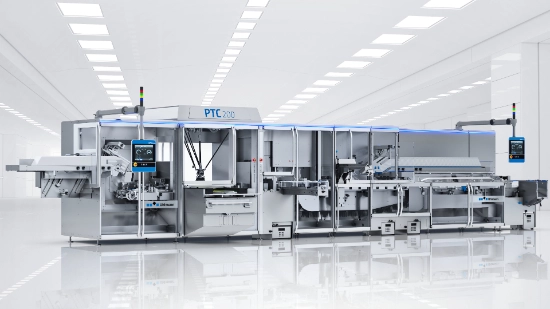
However, sourcing is not the only limiting factor for paper. Until now, pure paper-based packaging has usually only been technically possible as secondary packaging, e.g. as cartons or trays. At Uhlmann, we are currently working intensively with film and paper manufacturers on solutions, such as paper blisters, which will also protect sensitive products from external influences such as water vapor and ensure process reliability. For example, highly sensitive parenteral products can already today be safely packaged in paper or plastic trays on our PTC 200 cartoning line, with the high degree of modularity of the individual system components making this changeover possible.
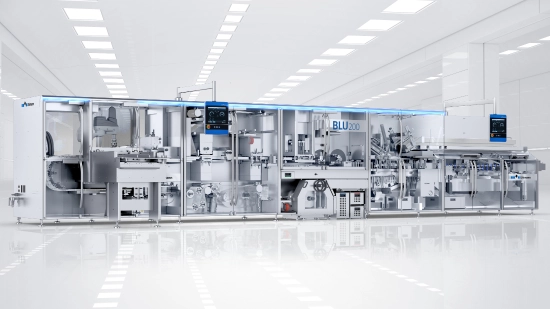
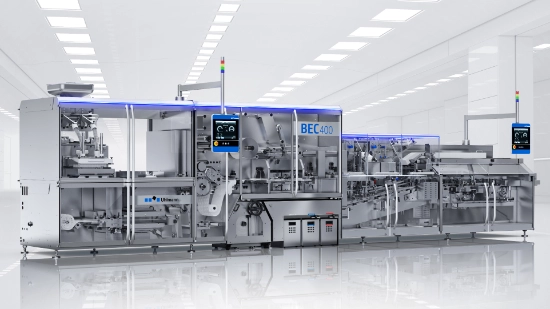
Plastics now offer a wide range of possibilities for combining excellent barrier properties and process reliability with packaging concepts that consider material efficiency and recyclability. An important approach in this context is mono-materials: Packaging solutions made from a single type of plastic can help facilitate material separation and support packaging concepts designed with recyclability in mind. For solids and parenteral products, we offer reliable, process-safe solutions in this area: The BLU 200 blister machine, for example, is also available in a version for the reliable processing of PP mono film. The BEC blister line is suitable for packaging solid dose products in PP mono blisters or other material-optimized packaging solutions. Further solutions are currently under development.
«Different materials, different process behavior, new packaging designs – developing material-efficient packaging solutions with improved recyclability is a complex process. At Uhlmann, we have extensive experience in this field and support you throughout the process: from material selection to process optimization.»

Valentin Knupfer
Team Leader Process Automation & Optimization
Aligning packaging processes with new requirements for material efficiency and recyclability often requires changes to established processes. Our experts already have extensive experience in this area. Get in touch – we will be happy to advise you on how to adapt your packaging lines to changing material and process requirements. When switching from PVC-aluminum blisters to mono-material solutions such as mono-PP, mono-HDPE or mono-PET, our experts provide manufacturer-independent guidance on selecting the foil grades most suitable for your specific requirements.
«Sustainability has long become more than a strategic issue for the packaging industry: New regulatory requirements are changing the way packaging is developed and processes are planned. As a result, more and more of our customers involve us in their considerations right from the start. The benefit to you? A faster path to suitable solutions for new requirements.»

Maren Kobusch
Strategic Product Manager Smart Services & Tools
Packaging solutions for new material and process requirements
Do you need a process-safe line for processing recyclable materials and want to make your packaging processes more resource-efficient? With the PTC 200 Parenteral Tray Center and the BEC 400 blister line, Uhlmann offers solutions that support you in adapting your packaging processes to new requirements.